
Alleviating Anxiety with Taijiwuxigong (Qigong) for Anxiety Relief
Updated: Sep 13
Anxiety can feel overwhelming. It affects the mind and body, making it hard to focus or relax. I have found that practicing Taijiwuxigong is a gentle and effective way to ease anxiety. This ancient Chinese practice combines slow movements and mindfulness. It helps calm the nervous system and restore balance. In this post, I will share how Taijiwuxigong (the type of qigong I teach) can support anxiety relief and how you can start practicing it today.
Understanding Anxiety and Its Effects
Anxiety is more than just feeling worried. It triggers physical symptoms like a racing heart, muscle tension, and shallow breathing. These symptoms can create a cycle that makes anxiety worse. When anxiety persists, it can affect sleep, energy, and overall health.
Taijiwuxigong addresses anxiety by focusing on the body’s slow movements and energy flow. It encourages relaxation and helps release tension. The slow, deliberate movements and deep breathing activate the parasympathetic nervous system. This system promotes rest and recovery, reducing the fight-or-flight response that anxiety often triggers.

How Qigong Supports Anxiety Relief
Qigong offers several benefits that directly target anxiety symptoms:
Reduces muscle tension: Gentle lengthening and movement ease tight muscles.
Improves breathing: As the structure gently opens the breathing becomes deeper, increasing oxygen intake and calming the mind.
Enhances focus: Concentrating on movements helps shift attention away from anxious thoughts.
Balances energy: Taijiwuxigong works with the body’s energy meridians to open and clear out the energy system.
Promotes relaxation: The slow pace encourages a state of calm and peace.
These effects combine to create a powerful tool for managing anxiety. Practicing regularly can build resilience and improve emotional well-being.
Getting Started with Qigong for Anxiety Relief
Starting qigong is simple and accessible. You do not need special equipment or prior experience. Here are some steps to begin:
Find a quiet space: Choose a calm area where you can move freely.
Wear comfortable clothing: Loose clothes help you move without restriction.
Start with basic movements: Focus on simple exercises that involve slow arm and leg movements.
Breathe deeply: Notice your breathing slows down.
Practice regularly: Aim for 10-20 minutes daily to build a routine.
You can learn Taijuwuxigong through at a local class or online sessions. For those in the Winchester and Eastleigh area, I have 3 in-person classes. These classes adapt exercises for all levels, including beginners.
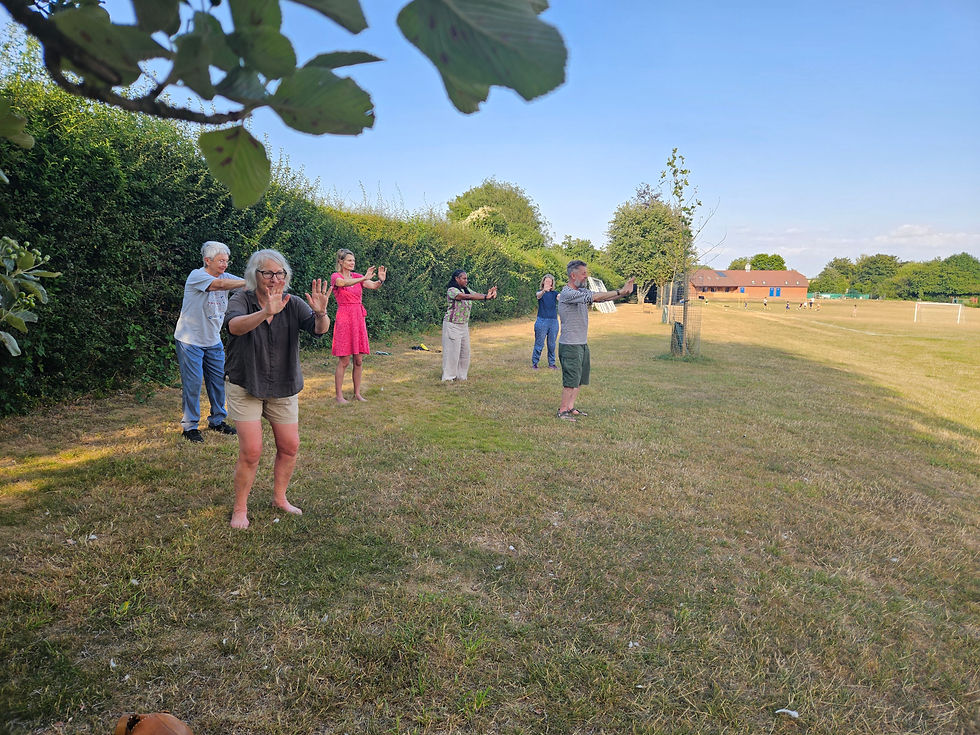
Simple Qigong Exercises to Try at Home
Here are two easy Taijiwuxigong exercises that help reduce anxiety:
1. Chest Daoyin (Lifting the Boulder)
Stand with feet shoulder-width apart, arms long palms facing down.
Sink, your weight into the ground to allow an upward vibrational force to rise through your legs and activate your lower Dantien.
Slowly rotate your arms and point your fingers towards the ground, palms facing each other.
Raise your arms in front of you to chest height, palms facing each other.
Rotate your arms so palms face the ground.
Exhale slowly as you lower your hands back down.
Repeat 3 - 9 times, focusing on smooth, flowing movement.
By mentally imagining you are lifting a weight you engage the deep fascia and core stabilizers without tensing your superficial muscles.
As you lift and lower, the physical elongation of the spine and joints act like squeezing a sponge, forcing emotional stress, toxins and stagnant energy (Binqi) out of the body through the extremities.
2. Closing Daoyin - calming the mind
Stand with feet hip-width apart, arms hanging long beside the body.
Rotate arms so palms face forward.
Slowly lift the arms out to the sides until wrists are the height of the head.
Bring hands towards each other until shoulder width.
Turn palms to a downwards direction and lower arms.
Keep the mind focussed on the downward sensation under the hands as the arms come down and continue in the mind the downward flow from both hands and feet when the arms are long.
Repeat and continue for 5-10 minutes.
These exercises help you connect your physical posture, mental focus and earch force and breath. They create a sense of calm and control that can ease anxious feelings.
Integrating Taijiwuxigong into Daily Life
To get the most from qigong, try to make it part of your daily routine. Here are some tips:
Set a regular time: Morning or evening works well for many people.
Create a peaceful environment: Use soft lighting or calming music if it helps.
Be patient: Benefits build over time with consistent practice.
Combine with other healthy habits: Good sleep, balanced diet, and gentle exercise support anxiety relief.
Join a class: Classes can provide structure and motivation and are a great way to meet like minded people.
Remember, qigong is adaptable. You can practice standing, sitting, or even lying down if needed.
For those interested in exploring further visit the classes pages or email me to book a one to one session.
Embracing a Calmer, Healthier You
Qigong is a gentle, effective way to manage anxiety and improve overall well-being. It helps cleanse the body, increase energy levels, and reduce stress. Whether you are new to qigong or looking to deepen your practice, these exercises can support your journey to greater calm and balance.
By dedicating a few minutes each day to qigong, you can experience a noticeable difference in how you feel. The practice is accessible to everyone, including beginners. Embrace this ancient art and discover the peace it can bring to your life.


Comments